Searching New Homes in Avon, NC
You’ve been searching for three months. Every time something decent pops up on Zillow, it’s already under contract by the time you call. The ones that stay on the market? There’s a reason. Needs a new roof. Foundation issues. Smells like mildew from three feet away. Or it’s listed at $550,000 for 900 square feet because the owner thinks “vintage beach cottage” means something other than “hasn’t been updated since 1987.”
You’re not imagining it. The Avon housing market is tight, competitive, and frustrating if you’re trying to buy here.
But it’s not impossible. You just need to know what you’re dealing with.
What the Avon Market Looks Like Right Now
Avon has maybe 40 to 60 homes on the market at any given time. That’s the whole inventory. Some weeks it’s less.
Compare that to a mainland town the same size and you’d see 200+ listings. But Avon sits on a barrier island with limited developable land. What’s here is here. Cape Hatteras National Seashore protects most of Hatteras Island, which is great for keeping the beaches pristine and terrible for housing supply.
The median home price hovers around $396,000. That number moves, but not much. Avon’s cheaper than Duck or Corolla. More expensive than some mainland Dare County areas. Right in the middle for Hatteras Island.
Homes move fast in spring and summer. List something in April and it might be under contract in two weeks. List it in January and it could sit for two months. Buyers have more leverage in winter. Sellers have more leverage in peak season.
Cash buyers are common. Maybe 40-50% of transactions. When you’re competing against someone who can close in ten days with no financing contingency, you’re at a disadvantage. Doesn’t mean you can’t win, just means you need to be ready to move fast and make your offer clean.
Inventory changes weekly. A house that wasn’t for sale on Monday might list on Thursday. Something under contract might fall through and come back on the market. You can’t be passive about this. You need to watch listings, check in with agents, be ready to tour on short notice.
What Different Price Points Get You
Let’s break down what your money buys in Avon. These aren’t guarantees—every property is different. But this gives you realistic expectations.
Under $300,000
Good luck.
You’ll find maybe one or two options in this range at any given time. Usually a small condo, a mobile home on a tiny lot, or a house that needs serious work. We’re talking new roof, new HVAC, mold remediation, foundation repairs. The kind of project where you add $75,000 in renovations on top of the purchase price.
Or you find a tiny lot with a structure that’s barely habitable. Tear-down potential, which means buying land with a demolition project attached.
If you see something under $300K in decent shape, someone else already has an offer in.
$300,000 to $400,000
This is where things open up a bit.
You’ve got two main options here:
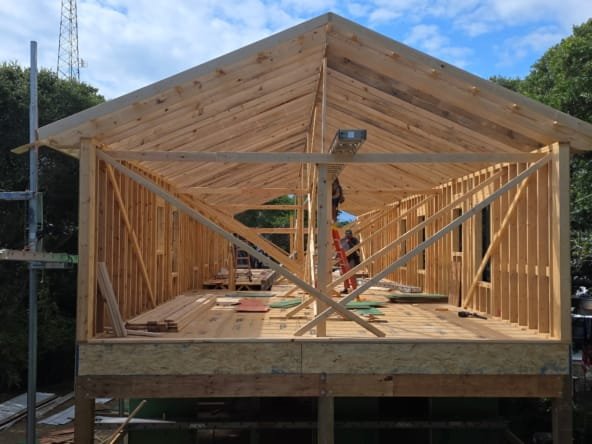
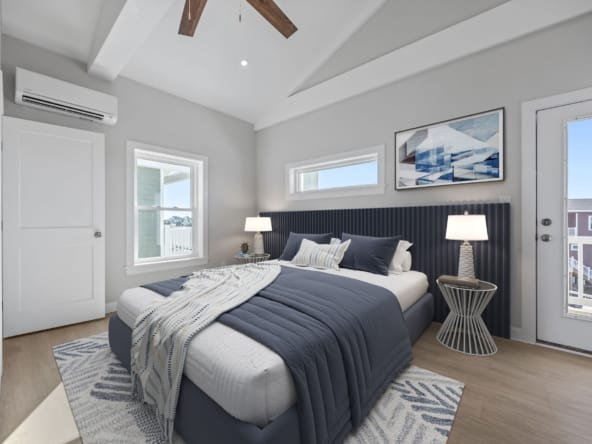
Kinnakeet Villas: New construction starting at $395,000. Two bedrooms, two bathrooms, single-level, attached garage. Modern everything—hurricane-rated windows, energy-efficient HVAC, current building codes. Community pool and pickleball courts. HOA handles exterior maintenance. R-2A zoning means no vacation rentals, so you’re buying into a residential neighborhood, not a rental zone.
The $475,000 model adds a loft (works as a third bedroom or office) and a half bath. Same quality construction, just more space.
This is the only new construction under $500K in Avon right now. If you want new, this is it.
Existing homes: Older beach cottages, usually built in the 1970s-1990s. Figure 1,000 to 1,400 square feet, two or three bedrooms, varying condition. Some have been updated—new kitchen, renovated bathrooms, fresh paint. Others need work.
At this price point, expect some deferred maintenance. Maybe the deck needs replacing. Maybe the HVAC is original and running on borrowed time. Roof might have five years left, might need attention sooner.
You’re not getting oceanfront. You’re not getting soundfront. You’re getting a home within biking or short driving distance to the beach. Probably not walking distance unless you’re right in the middle of town.
$400,000 to $600,000
This range gets you better condition and more space.
Homes here are typically 1,400 to 2,000 square feet, three bedrooms, two bathrooms. Many have been renovated in the last ten years. Updated kitchens, modern bathrooms, newer systems. Still not new construction, but closer to move-in ready.
You might find soundfront properties at the upper end of this range. Not big lots, not huge homes, but water access and views. Soundfront is more affordable than oceanfront and honestly more practical for a lot of people—calmer water, easier kayak/paddleboard access, beautiful sunsets.
Some properties in this range are being sold as vacation rentals with rental history. If you see “proven rental income” or “$45,000 annual gross” in the listing, that’s what you’re looking at. You can buy it and live in it, but you’re competing with investors who see the rental numbers and do the math differently than you do.
$600,000 to $900,000
Larger homes, better locations, nicer finishes.
You’re looking at 2,000 to 2,800 square feet, three or four bedrooms, multiple living areas. Many have been custom built or extensively renovated. Higher-end materials, better construction quality, more attention to design.
Soundfront properties are more common in this range. Some have docks, boat lifts, direct water access. Good for people who own boats or kayaks and want to use them regularly.
You might find near-oceanfront properties here too. Not directly on the beach, but close enough to walk. Second or third row, ocean views from upper decks, short walk to beach access.
At this price point, you’re looking at homes that could work as vacation rentals, primary residences, or second homes. Flexibility is part of what you’re paying for.
$900,000 and Up
Oceanfront or prime soundfront.
These are the properties people picture when they think “Outer Banks beach house.” Direct beach access, big decks, open floor plans designed for entertaining. Many are built or rebuilt within the last ten to fifteen years.
Square footage ranges from 2,500 to 4,000+. Four to six bedrooms. Multiple levels. High-end everything.
Most buyers in this range are either very wealthy retirees, people buying second homes, or investors running them as high-end vacation rentals. If you’re reading this guide because you’re trying to find an affordable place to live in Avon, this range probably isn’t relevant.
New Construction vs. Existing Homes
New construction in Avon means Kinnakeet Villas. That’s it. There might be one or two custom builds happening on private lots, but those aren’t on the open market. They’re owner-built projects or contracted builds for specific buyers.
Why is new construction so rare here?
Land scarcity. There isn’t much left to develop. National Seashore boundaries, wetlands, existing development—most buildable land is spoken for.
Cost. Building on a barrier island is expensive. Materials get trucked across the bridge. Labor costs are high because there aren’t that many contractors who work out here. Hurricane codes require stronger construction, better materials, elevated foundations in many areas. Flood compliance adds cost. The economics make it difficult to build modest homes at prices local buyers can afford.
Most developers who take on that cost and risk target the high end where profit margins are better. Kinnakeet Villas exists because it was designed specifically as workforce housing. The developer chose smaller profit margins to hit a price point that works for teachers, nurses, essential workers. That’s unusual.
So what’s the trade-off between new and existing?
New construction (Kinnakeet Villas):
- Modern systems, energy-efficient, low maintenance
- Warranties on construction and appliances
- Built to current hurricane codes (stronger, safer)
- No surprises—you know what you’re getting
- HOA handles exterior upkeep
- Pool and amenities included
- Premium price compared to older homes of similar size
- Less character than older beach cottages
- Smaller lots, less privacy than some older neighborhoods
Existing homes:
- More character, varied architecture, established landscaping
- Potentially bigger lots, more outdoor space
- Sometimes better locations (closer to beach/pier)
- Lower purchase price for similar square footage
- But: coastal wear, aging systems, deferred maintenance
- Higher utility costs (older insulation, less efficient HVAC)
- Renovation needs (factor in $20K-$80K for updates)
- No warranties, you own the problems
Neither is wrong. Depends what you value and what you can afford.
Geography and Neighborhoods in Avon
Avon doesn’t have formal neighborhood names like subdivisions do. It’s a small village, one main road (Highway 12), houses on either side stretching from sound to ocean.
But location within Avon matters.
Soundside: West of Highway 12. Backs up to Pamlico Sound. Generally calmer, more residential feel. Some properties have water access, docks, boat slips. Soundfront homes command premium prices, but soundside properties that aren’t directly on the water are more affordable. You’re farther from the ocean (maybe a mile), but closer to Canadian Hole (famous for windsurfing and kiteboarding). Sunsets over the sound beat anything you’ll see oceanside.
Flood insurance varies. Some soundside areas are in higher flood zones, some aren’t. Check FEMA maps before you fall in love with a property.
Central Avon: Right along Highway 12 or within a few blocks of it. Convenient to Food Lion, Avon Pier, restaurants, gas stations. You can walk or bike to most things you need. Trade-off is road noise, less privacy, more tourist traffic in summer. Some people love the walkability. Others want more separation from the main drag.
Kinnakeet Villas sits in central Avon on Villa Drive, which is off Highway 12 but close enough to everything. Quiet street, residential setting, but you’re five minutes from the grocery store.
Oceanside: East of Highway 12. Closer to the beach, sometimes walking distance. The closer you get to the ocean, the higher the price. Oceanfront is its own category (and mostly over $900K). Near-oceanfront might be in reach at $600K-$800K.
Flood zones are a bigger deal oceanside. Most oceanfront and near-oceanfront properties are in higher flood zones, which means higher insurance costs. Sometimes significantly higher. A home that’s $500/year for flood insurance soundside might be $2,500/year oceanside.
Walking distance to the beach sounds great until you realize you’re also walking distance to tourist foot traffic, beach parking hassles in summer, and the wear that comes with being that close to saltwater.
The Vacation Rental Factor
A lot of Avon homes are vacation rentals. Maybe 30-40% of residential properties. That affects your search in a few ways.
When you’re looking at listings, check the description. If it says “strong rental history,” “proven income producer,” or lists rental revenue, the seller is marketing it as an investment property. They’re pricing based on income potential, not just the home’s value as a residence.
You can still buy it to live in. But you’re competing with investors who calculate differently. An investor sees “$60,000 annual rental income” and thinks “I can justify $550,000 because the ROI works.” You see a three-bedroom cottage you want to live in and think “$550,000 is more than I wanted to spend.”
Investors often win those bidding wars.
Some buyers specifically want to avoid vacation rental areas. Too much turnover, too much noise in summer, no sense of community. If that’s you, pay attention to zoning.
Kinnakeet Villas is zoned R-2A, which requires 30-day minimum occupancy. No weekly rentals allowed. That keeps it residential. Your neighbors are living there year-round, not rotating through every Saturday. Some people value that enough to make it a deciding factor.
Other neighborhoods in Avon allow vacation rentals, which means you might be the only year-round resident on your street. For some people that’s fine. For others it’s a dealbreaker.
Working with Agents and Making Offers
You need a local agent. Not someone who works the whole Outer Banks and treats Hatteras Island as an afterthought. Someone who lives here or works here regularly and knows what’s happening.
Small markets run on relationships and information. The best deals don’t always make it to Zillow. Agents hear about listings before they go live. They know which sellers are considering offers before the sign goes up. They know which properties have problems that aren’t in the listing photos.
You can’t replicate that knowledge by searching online from two states away.
When you make an offer in a tight market, you need to be competitive. Lowballing doesn’t work. If a house is listed at $425,000 and it’s in decent shape in a good location, offering $380,000 just pisses off the seller and wastes everyone’s time.
Competitive means close to asking price or at asking price. It means limiting contingencies to the essentials (inspection, appraisal, financing if you need a loan). It means being flexible on closing dates if that matters to the seller.
Due diligence periods in North Carolina give you time to inspect, review, and walk away if you find problems. Typical due diligence is 14 to 21 days. You can offer shorter to make your offer stronger, but don’t skip it entirely. Coastal properties have issues that don’t show up in listing photos. You need time to inspect.
Cash talks. If you’re financing, consider getting your pre-approval letter from a local or regional lender who knows coastal properties. Sellers trust those more than online lenders they’ve never heard of.
Be ready to move fast. If you’re out of state and you see a property you like, plan to visit within days, not weeks. By the time you schedule a trip two weeks out, it might be gone.
Coastal Property Considerations
Buying on a barrier island is different from buying inland. These are the things that catch people off guard.
Flood insurance: Required if you’re financing and the property is in a flood zone. Even if you’re paying cash, you need it. Premiums vary wildly based on flood zone designation. Get a quote before you commit. It affects your total housing cost.
Wind and hurricane coverage: Standard homeowners insurance often excludes wind damage in coastal areas. You need separate wind/hurricane coverage. This adds significant cost on top of regular insurance. Some homes are harder to insure if they’re older or haven’t been updated to current codes.
Inspection red flags for coastal properties: Moisture damage, rust on metal components, foundation settling, roof wear from salt and wind, HVAC systems corroded from salt air. A home that looks fine might have hidden problems. Pay for a thorough inspection. It’s worth the cost.
Hurricane building codes: Newer homes are built to stricter codes. Impact-resistant windows, reinforced roof connections, elevated foundations in flood zones. Older homes (pre-2000) weren’t held to the same standards. That doesn’t mean they’re unsafe, but they’re more vulnerable. Insurance companies know this and price accordingly.
Long-term maintenance: Coastal homes need more maintenance. Salt air corrodes everything. Paint doesn’t last as long. Decks need replacing sooner. HVAC systems work harder and wear out faster. Budget for ongoing upkeep, not counting major repairs.
If you buy an older home, expect to replace major systems and address deferred maintenance over time. New construction delays some of this, but you’ll still deal with salt air and coastal wear eventually.
New construction delays some of this, but you’ll still deal with salt air and coastal wear eventually.
When to Buy
Winter (November through February) has the least competition. Fewer buyers looking, fewer tourists visiting, sellers more motivated. If you can handle touring houses in 40-degree wind, you’ll have more negotiating power.
Spring (March through May) has the most inventory. People list before summer rental season starts. More options, but also more competition. You’re bidding against other buyers who had the same idea.
Summer is busy but tricky. Some sellers pull listings during peak rental season because they don’t want showings interrupting guest stays. Others list because they want to capitalize on buyer traffic. Inventory is mixed.
Fall (September through October) is decent. Hurricane season winds down, tourist crowds thin out, sellers who didn’t sell in spring try again.
Interest rates in 2026 are what they are. You can’t time that. If you wait for rates to drop, you might wait a year and miss properties. If you buy now and rates drop later, you can refinance.
The key is being ready. When the right property hits the market, you have maybe a week to act. If you’re not pre-approved, if you haven’t toured Avon, if you’re still “thinking about it,” you’ll lose it.
Common Mistakes Avon Buyers Make
Underestimating insurance costs. Flood and wind coverage add significant annual costs to your housing expenses. A lot of buyers don’t budget for it and end up house-poor.
Not budgeting for hurricane prep. You need supplies. Bottled water, non-perishables, batteries, flashlights, tarps, plywood if your windows aren’t impact-rated. A generator is a worthwhile investment if you plan to ride out storms. Budget for it.
Falling in love with location and ignoring condition. “But it’s two blocks from the beach!” Great. It also needs a new roof and foundation work. Location doesn’t fix structural problems.
Skipping flood zone research. FEMA flood maps are public. Check them. Know what zone you’re buying in. Know what your insurance will cost. Don’t wait until closing to find out.
Not considering year-round livability. If you’re planning to live here full-time, visit in February. See what winter feels like. Make sure you can handle the isolation, the wind, the off-season quiet. Loving Avon in July doesn’t mean you’ll love it in January.
Rushing inspections. You’re excited. You want to close fast. Don’t skip a thorough inspection. Pay extra for a moisture test, a roof inspection, an HVAC check. Find problems before you own them.
What to Do Next
If you’re serious about buying in Avon, here’s your action plan.
Tour Kinnakeet Villas. If new construction under $400K interests you, go see it. Walk the site, check out floor plans, talk to the sales team about availability and financing. Even if you don’t end up buying there, it gives you a baseline for what new construction looks and feels like at this price point. Check out our current inventory of new homes in Avon, NC.
Connect with local real estate agents. Plural. Talk to two or three. See who responds, who knows the market, who you trust. You want someone plugged into what’s happening, not someone who checks their email once a week.
Understand your total cost of ownership. Mortgage, property taxes, insurance (homeowners, flood, wind), HOA dues if applicable, utilities, maintenance. Add it up. Make sure you can handle it, not just barely but comfortably. Emergencies happen. Repairs happen. You need cushion.
Move fast when you find something. If a property checks your boxes, don’t wait three days to decide. Schedule a showing, make an offer if it works, lock it down. Good properties in Avon don’t sit.
The Reality
Buying in Avon is competitive. It’s expensive relative to a lot of places. Inventory is limited. You’ll probably lose out on a few properties before you land one.
But it’s not impossible.
People buy here every month. Teachers, nurses, retirees, remote workers, families who fell in love with the island and figured out how to make it work. You can too.
You just need to be realistic about what’s available, what it costs, and what you’re getting into. Coastal living is beautiful. It’s also harder and more expensive than living inland. Insurance is higher. Maintenance is constant. Hurricanes are real.
If you’re okay with that—if the trade-offs are worth it for you—then Avon might be where you end up.
Kinnakeet Villas is worth touring if you want new construction under $500K. It’s the only game in town right now at that price point. That doesn’t mean it’s right for everyone, but it’s worth seeing.
Start with pre-approval. Visit the island. Talk to agents. Run the numbers. See what’s out there.
The right property exists. You just have to be ready when it shows up.