Why We’re Different
Drive through just about any new development on the Outer Banks and you’ll see the same pitch. “Luxury coastal living.” “Investment opportunity.” “Rental income potential.” Big signs with renderings of million-dollar homes. Marketing that speaks to people who live somewhere else and want a beach property.
Nothing wrong with that. It’s how real estate works in vacation markets.
But it leaves out the people who actually live here.
Kinnakeet Villas was built with a different question in mind: what if we designed a neighborhood for the people who work on Hatteras Island instead of the people who visit?
Not as an afterthought. As the whole point.
That shift—from investment property to residential community—changes everything about how the place is built, priced, and structured.
Built for Residents, Not Investors
Most new construction on the Outer Banks gets designed with rental income in mind.
How many bedrooms can we fit? Can we add bunk rooms to sleep more people? Is the kitchen big enough for multiple families cooking at once? Will this floor plan maximize occupancy?
Those are smart questions if you’re building a vacation rental. They’re the wrong questions if you’re building a home.
Kinnakeet Villas started with different questions. What do year-round residents actually need? What makes sense for someone working full-time and coming home tired? What layout works for a family, a couple, someone living alone?
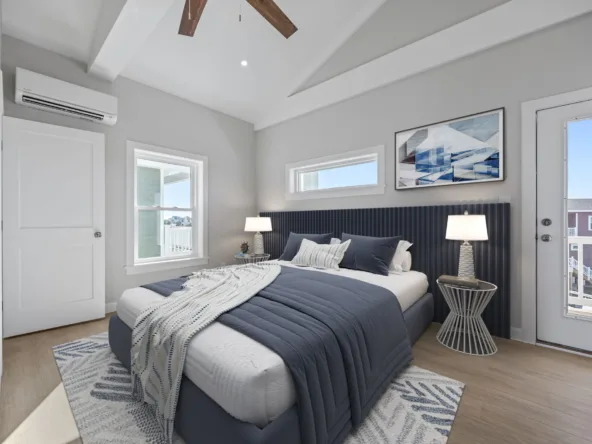
The floor plans reflect that. Two bedrooms, two bathrooms in the base model. Not huge. Not trying to sleep twelve people. Just a home-sized home.
Single-level living. No stairs to deal with when you’re hauling groceries or getting older or coming back from a long shift. Open kitchen and living area because that’s how people cook and hang out, not because it looks good in rental photos.
Attached garage. Sounds basic, but it matters. You’re not unloading groceries in the rain. You’re not leaving your truck parked outside in a nor’easter. You’ve got covered storage for fishing gear, tools, bikes, whatever you need.
The homes aren’t flashy. No granite countertops and high-end finishes designed to justify $5,000/week rental rates. Just solid construction, modern systems, materials that’ll last. Built for living in, not impressing guests.
That’s a design philosophy, not a cost-cutting measure. It’s choosing function over showroom appeal.
The Zoning Difference
Here’s the thing that sets Kinnakeet Villas apart more than anything else: the R-2A zoning.
Minimum 30-day occupancy. No short-term vacation rentals allowed.
That’s permanent. It’s not a temporary restriction that expires in five years. It’s baked into the land use. Can’t be changed without a full zoning amendment, which isn’t happening.
Why does that matter?
Because it keeps the neighborhood residential. You’re not buying next to someone who’s running a vacation rental business. You’re buying next to someone who lives there.
Your neighbor isn’t a different family every week. It’s the same people, year-round. You know their names. They know yours. You keep an eye on each other’s places. You’re part of a community, not a rental zone.
The zoning also protects affordability. Investors won’t buy here because there’s no rental income. That eliminates the speculative demand that drives up prices in other areas. The only people buying at Kinnakeet Villas are people who plan to live there.
Most developments don’t do this. They want to maximize buyer options—owner-occupied or rental, doesn’t matter, just sell the unit. That flexibility is good for sales. It’s terrible for community building.
Kinnakeet Villas chose community over flexibility. That’s rare.
Pricing That Makes Sense
$395,000 for the base model. $475,000 for the upgraded model with the loft.
A teacher making $48,000 and a nurse making $62,000—combined household income of $110,000. With a decent down payment and reasonable debt, they can qualify for a mortgage on a $395,000 home. It’s tight, but can work.
A charter captain and a restaurant manager, both making $50,000. Same story. Household income around $100,000, and homeownership becomes possible.
You’re not trying to stretch to $600,000. You’re not competing with cash buyers from Charlotte who see this as a rental property. You’re buying a home priced for actual wages, not vacation rental income projections.
And the pricing is transparent. No “inquire for pricing” games. No negotiations where the number depends on how much the seller thinks they can get. Listed price is the price.
That honesty is uncommon in high-end coastal real estate. Most developments price high and negotiate down, or price based on what the market will bear regardless of local incomes.
Kinnakeet Villas priced based on who the homes are for. That’s different.
Closing Cost Assistance
Closing costs typically run $8,000 to $15,000. For a lot of buyers, that’s the gap between “we can almost do this” and “we can actually do this.”
Kinnakeet Villas offers assistance to cover those costs for essential workers. Teachers, healthcare workers, first responders, municipal employees. The people Hatteras Island can’t function without.
You still need the down payment. You still need stable income and decent credit. But the closing cost barrier gets removed. If you are interested, contact us to discuss what options we offer.
Kinnakeet Villas offers it because the goal isn’t just to sell homes. It’s to get essential workers into homes. Those are related but not identical goals.
Maintenance-Free Living
The HOA at Kinnakeet Villas covers lawn care, exterior maintenance, landscaping, and refuse disposal.
For people working full-time or pulling double shifts or raising kids, that’s huge.
You’re not spending your Saturday mowing the lawn. You’re not coordinating with neighbors to get common areas cleaned up. You’re not trying to figure out who’s going to handle pool maintenance or irrigation repairs.
It’s handled. Included in your HOA dues, which are part of your monthly housing cost. You know what you’re paying, it doesn’t change month-to-month, and you don’t have to think about it.
Some people hate HOAs. They want full control over their property. Fair enough. Kinnakeet Villas isn’t for them.
But for people who want the benefits of homeownership without the burden of exterior maintenance, this model works. You own the home. You build equity. You just don’t spend every weekend doing yard work.
That’s not laziness. It’s recognizing that people working essential jobs don’t have unlimited free time.
Modern Construction Standards
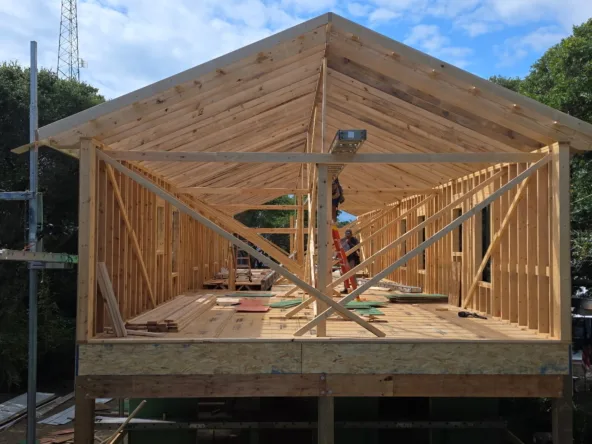
These homes are built to 2025 codes. That’s not a throwaway line.
Building codes have gotten stricter, especially in coastal areas. Hurricane resistance, flood requirements, energy efficiency—all higher standards than what older homes were built to.
Impact-resistant windows. Proper flashing and moisture barriers. Modern HVAC systems that don’t cost a fortune to run. Electrical and plumbing that’s up to current standards.
You’re not buying a house that was built in 1985 and has been patched and repaired for forty years. You’re buying new construction with warranties, modern systems, and materials designed to handle coastal weather.
That reduces long-term costs. Newer HVAC means lower electric bills. Better insulation means less heat loss in winter. Modern windows mean less maintenance and better storm protection.
It also means fewer surprises. Old houses have problems that don’t show up until you own them. New construction? You know what you’re getting.
Is new construction perfect? No. But it’s a different risk profile than buying a 30-year-old beach cottage and discovering the wiring’s shot and the roof needs replacing.
Location in Avon
Avon sits in the middle of Hatteras Island. That’s geography, but it’s also an advantage.
You’re close to Buxton (lighthouse, restaurants, shops). You’re near Hatteras Village (charter fleet, ferry terminal). You’re not too far from Nags Head if you need bigger stores or medical specialists.
But you’re far enough south to avoid the worst of the northern Outer Banks tourist traffic. You’re in the National Seashore, which means protected coastline and limited development.
The beaches in Avon are wide, accessible, less crowded than beaches farther north. The Avon Pier is a landmark—good fishing, great views, community gathering spot.
Food Lion, Ace Hardware, a medical center, gas stations, restaurants. Enough infrastructure to live without driving off-island constantly.
It’s the practical choice if you want to live on Hatteras Island year-round. Not as isolated as Hatteras Village, not as touristy as Buxton can get in summer, not as small as Rodanthe.
Just a good spot to be.
The Kinnakeet Name
Avon used to be called Kinnakeet. That’s the Algonquian name, roughly translating to “that which is mingled”—a reference to where sound and ocean waters mix.
The post office changed it to Avon in 1883 because they thought it sounded more refined. But locals never stopped using Kinnakeet. It’s on businesses, boats, street signs. It’s part of the island’s identity.
Naming this development Kinnakeet Villas is deliberate. It signals that this isn’t some imported concept. It’s rooted in local history and culture. It belongs here.
Small detail. But it says something about the project’s intent.
What This All Adds Up To
Strip away the individual features and what you’re left with is a philosophy: build for the people who live here.
Not the people who visit. Not the investors looking for rental income. The people who work on Hatteras Island and want to stay.
That philosophy shows up in the zoning, the pricing, the floor plans, the assistance programs, the amenities, everything.
Is Kinnakeet Villas perfect? No. It’s still expensive for people making $40,000 a year. It doesn’t solve the entire housing crisis. It’s a small development with limited inventory.
But it’s different from what usually gets built on the Outer Banks. And different matters when the usual approach has been pricing locals out for twenty years.
How This Compares
You don’t need to look far to see the contrast.
New developments in Duck start at $800,000. Southern Shores, $600,000 and up. Corolla, same story. Even Nags Head, you’re hard-pressed to find new construction under $500,000.
And almost all of it is designed for vacation rentals or second homes. High-end finishes, maximum bedrooms, rental income marketing.
Great for investors. Useless for teachers and nurses trying to live on the Outer Banks.
Kinnakeet Villas isn’t competing with those developments. Different market, different buyers, different purpose.
It’s competing with the option of leaving. Of giving up on homeownership here and moving to Currituck or Manteo or off the Outer Banks entirely.
For people who want to stay, who want to own instead of rent, who want to be part of a residential community on Hatteras Island, this is one of the few options that exists right now.
That’s what makes it different.
Who This Works For
If you’re looking for a vacation rental investment, this isn’t it. The zoning won’t allow it.
If you want a second home you can also rent out to cover costs, this isn’t it.
If you need four bedrooms and 2,500 square feet, this isn’t it.
But if you’re a teacher, nurse, first responder, charter captain, restaurant manager, tradesperson, or anyone working on Hatteras Island who wants to own a home and be part of a year-round community, this is worth looking at.
If you value neighbors over rental income, stability over speculation, and community over investment returns, this is built for you.
If you’ve been priced out everywhere else and thought homeownership on Hatteras Island was impossible, this might change that.
What to Do Next
Visit the site. Walk the neighborhood. Look at floor plans. Get a feel for the location.
Talk to the sales team about current availability, pricing, and financing options.
If you’re an essential worker, ask about the closing cost assistance program. Find out if you qualify and what the application process involves.
Get pre-approved for a mortgage so you know what you can afford. Run the numbers honestly—mortgage, taxes, insurance, HOA dues, utilities, everything.
And if the numbers work, if the location makes sense, if the community-first approach appeals to you, move forward.
Opportunities like this don’t come around often. A development designed for locals, priced for locals, with zoning that protects it from becoming another rental zone.
It’s not perfect. But it’s different. And right now, different is what Hatteras Island needs.